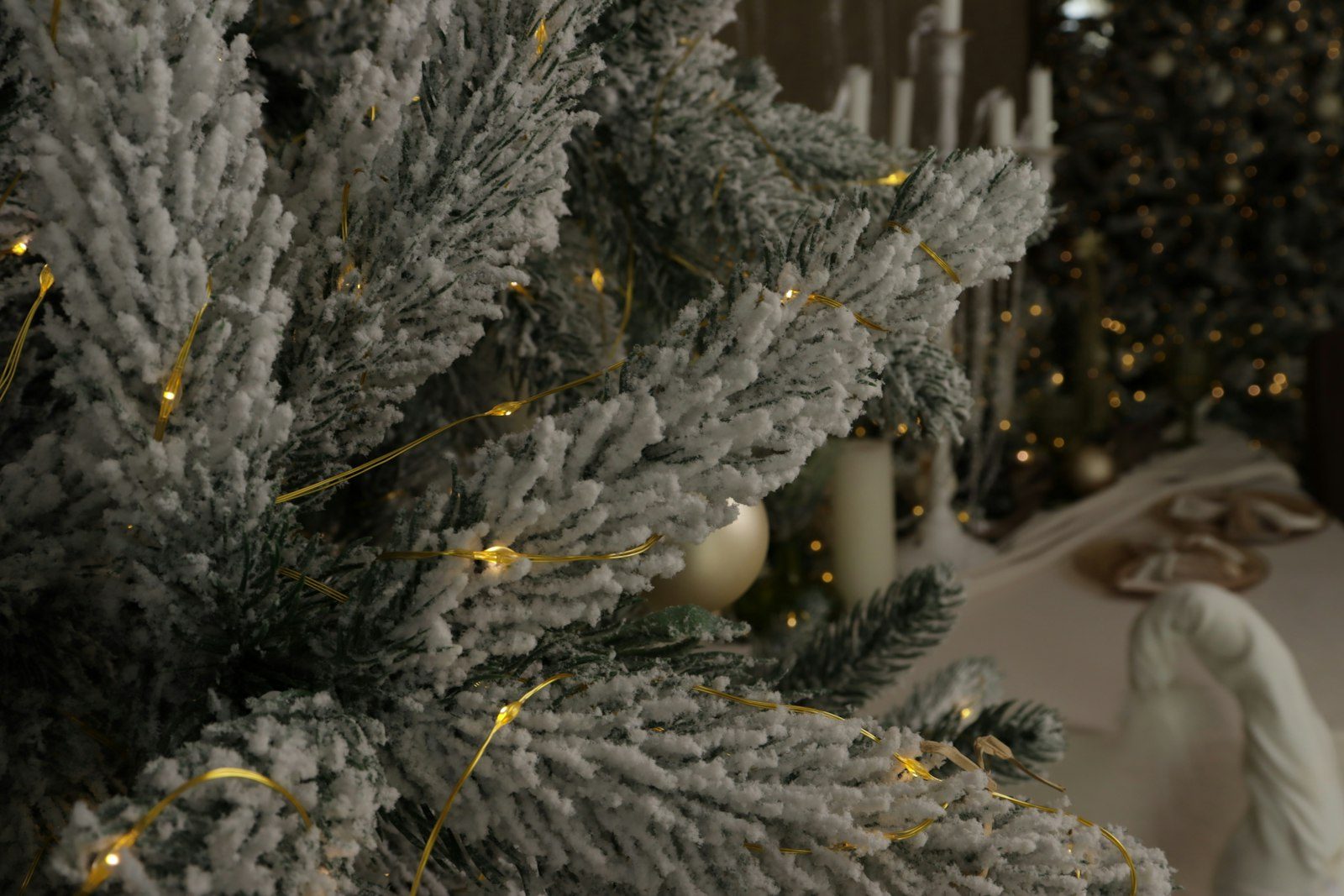
Nobody is neutral about flocked Christmas trees. People either think they’re the most magical thing to ever happen to December, or they think they’re a glittery crime against nature. There is no middle ground, and both camps are loud about it.
Here’s my honest take after years of watching these trees in real homes: flocked trees are genuinely gorgeous and genuinely messy, and whether the magic outweighs the mess depends entirely on your household. This is the no-hype review — the shedding reality, the real prices, who should buy one, and who should walk away.
What “Flocked” Actually Means
Flocking is a sprayed-on coating — usually a mix of cellulose fibers, adhesive, and sometimes a little glitter — applied to an artificial tree’s branches to simulate snow. It ranges from a light dusting (branches tipped white, green still visible) to heavy flocking (the tree looks like it just survived a blizzard, barely any green showing).
The quality spectrum is enormous. Good flocking is evenly applied, adheres well, and looks like actual snow accumulation — thicker on top of branches, thinner underneath, the way real snow sits. Bad flocking looks like someone sneezed powdered sugar on a green tree: patchy, clumpy, and visibly artificial up close. The difference is almost entirely price-driven, which we’ll get to.
One thing people don’t realize: flocking changes the tree’s whole decorating logic. A flocked tree is already visually busy — all that white texture — so it needs fewer ornaments, not more. The classic flocked-tree look is sparse ornaments in metallic or jewel tones, lots of warm white lights, and restraint. People who load a flocked tree like a regular green tree end up with visual chaos.
Space: same heights as regular artificial trees (4–12 ft). Cost: $150–$600 for 7.5 ft. Fine for renters. Storage: needs a bigger box than unflocked (fluff doesn’t compress).
The Shedding Reality: An Honest Test
Let’s address the elephant in the living room: yes, flocked trees shed. The question is how much, and the honest answer is “it depends on the tree, and it gets better.”
Year one is the worst. A new flocked tree sheds loose flocking every time you touch it — during assembly, during decorating, when the cat brushes past, when you look at it too hard. Expect a fine white dust on the floor around the tree for the first season. It’s not dangerous (more on that below), but it is annoying, and it will get on dark clothing, dark furniture, and your black dog.
Years two and beyond are dramatically better. The loose stuff falls off in year one, and what remains is the well-adhered flocking. By year three, a quality flocked tree sheds about as much as a regular artificial tree — which is to say, barely at all. The trees that keep shedding forever are the cheap ones where the adhesive was skimped.
The mitigation playbook: Assemble the tree outdoors or in the garage if you can, and give it a good shake before bringing it in. Put a washable rug or a dark tree skirt under it for year one — the white dust shows on dark floors and hides on light ones, so plan accordingly. Run a handheld vacuum around the base weekly in December of the first year. After that, normal life resumes.
The bottom line: the mess is real but temporary. If someone tells you their flocked tree shed forever, they bought a cheap tree.
Space: year-one shedding zone: ~3 ft radius. Cost: $0 (just vacuuming). Fine for renters. Storage: shake outdoors before storing to shed loose flock.
Price: What You’ll Actually Pay
Flocked trees cost more than their unflocked equivalents — you’re paying for the flocking process and the fact that they’re trendier. Here’s the real price landscape for a standard 7.5-foot tree:
Budget ($150-$250): Light to medium flocking, thinner branch count, sometimes patchy application. Fine if you want the look on a budget, but expect year-one shedding and a tree that looks sparse without heavy ornamenting. This is the tier where “worth the mess?” gets genuinely debatable.
Mid-range ($250-$400): The sweet spot. Good flocking adhesion, fuller branches, often pre-lit (which matters more on flocked trees — stringing your own lights through flocked branches is miserable). Most of the trees you see in styled photos live in this tier.
Premium ($400-$600+): Heavy, even flocking, realistic branch structure, often with mixed foliage types under the flock. These are the trees that make people gasp. Diminishing returns kick in hard past $500 — you’re paying for brand and marginal realism gains.
The pre-lit question: On flocked trees, pre-lit is worth it. Wrapping your own light strings around flocked branches knocks flocking off and takes twice as long because you can’t see the branch structure. The pre-lit premium (usually $50-$100) pays for itself in saved frustration. Just test every light before the tree goes up — replacing a dead string on a flocked tree is its own special project.
Space: 7.5 ft is the standard; 9 ft+ jumps in price. Cost: $150–$600 (pre-lit adds $50–$100). Fine for renters. Storage: keep the original box — flocked trees don’t compress well.
Who Should Buy One (And Who Shouldn’t)
Buy a flocked tree if: you love the snowy aesthetic and your style leans winter-cabin, glam, or Scandinavian. They’re spectacular with metallic ornaments, white lights, and minimal color. They’re also great for warm climates — a flocked tree in a place that never sees snow is a charming bit of wish fulfillment.
Think twice if you have allergies. This is the big one people miss. Flocking itself is generally hypoallergenic, but the fine dust it sheds in year one irritates sensitive airways, and flocked branches trap household dust more than smooth artificial branches. If someone in the house has asthma or dust allergies, a flocked tree is a month of extra sneezing. An unflocked artificial tree is the safer play.
Think twice with certain pets. The white dust isn’t toxic, but it’s not something you want a pet ingesting in quantity, and some dogs find the texture fascinating. More importantly: cats. A white tree shows every cat hair, and dark-furred cats leave visible evidence of every nap. If your cat sleeps in the tree, a flocked tree becomes a lint roller advertisement.
Think twice in small spaces. Flocked trees visually expand — all that white makes the tree look bigger and brighter, which is lovely in a large room and overwhelming in a studio. In a small apartment, a slim (not full) flocked tree works; a full-size 7.5-footer will dominate the room in a way the same tree in green wouldn’t.
The renter note: Flocked trees are actually renter-friendly in one specific way — they’re so visually complete that they need fewer decorations, which means less stuff to buy, store, and hang with damage-free methods. A flocked tree with lights and a dozen ornaments looks finished. A green tree needs twice the decor to look equally intentional.
Space: slim profile for small spaces. Cost: Allergy/pet costs are medical, not decor. Fine for renters (needs less decor). Storage: same as any artificial tree, but bulkier.
Cleaning and January Storage
Cleaning during the season: A lint roller on a long handle is the flocked tree’s best friend — run it over the lower branches weekly in year one to catch loose flock before it migrates. For dust on the branches (years two+), a hair dryer on cool, low speed blows it off without disturbing the adhered flocking. Never use a damp cloth; moisture plus flocking adhesive equals clumps.
The ornaments question: Take ornaments off carefully — yanking them through flocked branches pulls flocking with them. It’s a small thing, but over five years of yanked ornaments, the branches get visibly thinner in the high-traffic spots.
Storage: This is where flocked trees punish you. The flocking doesn’t compress, so the tree won’t squeeze into a smaller box than it came in. Keep the original box — it’s sized for the fluffed tree, and trying to force a flocked tree into a generic tree bag crushes the flocking into sad, flat patches. If you tossed the box, buy an upright tree storage bag (the kind the tree stands up in) rather than a duffel-style bag you have to wrestle it into.
Store it somewhere dry. Damp storage plus flocking equals a musty tree that smells like a basement in December, and there’s no fixing that.
Lifespan: A quality flocked tree lasts 7-10 years with the shedding concentrated in year one. A cheap one lasts 3-4 years before the flocking looks patchy enough to bother you. The math favors buying mid-range once over buying budget twice.
Space: keep the original box. Cost: $30–$60 for an upright storage bag if needed. Fine for renters. Storage: dry storage only; damp ruins flocking.
FAQ
Is the flocking on Christmas trees toxic? The flocking on modern artificial trees is made from cellulose fibers and non-toxic adhesives — it’s not poisonous. But it’s not food either. Keep pets from chewing branches, and don’t let toddlers mouth the flocking. The year-one dust is a mild irritant for sensitive airways, not a toxin.
Can I flock my existing artificial tree myself? Yes — DIY flocking kits (spray cans of flocking) exist for $15-$30. The results are… enthusiastic rather than professional. DIY flocking looks good from six feet away in dim light and patchy up close in daylight. It’s a fun project for a tree that’s headed for retirement anyway, not a way to get a premium look on the cheap. Also: do it outdoors. The overspray gets everywhere.
Do flocked trees work with colored lights? They work, but warm white is the classic pairing for a reason. Colored lights on a white-flocked tree can look candy-like — fun for a kids’ room, chaotic for a living room. If you love colored lights, go with a lightly flocked tree (more green showing) rather than a heavily flocked one.
My flocked tree looks yellowed after a few years. Can I fix it? Yellowing comes from UV exposure and nicotine/smoke — it’s the flocking equivalent of aging. You can’t reverse it, but you can slow it by storing the tree away from light and heat. A lightly yellowed tree still looks fine in warm indoor lighting; it only shows in bright daylight. Prevention beats cure here.
The Verdict
So: worth the mess? If you buy mid-range or better, don’t have dust allergies, and can tolerate one dusty December — yes, absolutely. A good flocked tree is the single most dramatic Christmas decoration you can own, and the shedding problem is 90% a year-one problem. If you’re allergy-prone, have a cat that lives in the tree, or you’re shopping the $150 tier — buy a beautiful green tree instead and spend the savings on ornaments. The mess isn’t the dealbreaker; buying the wrong tree for your household is.