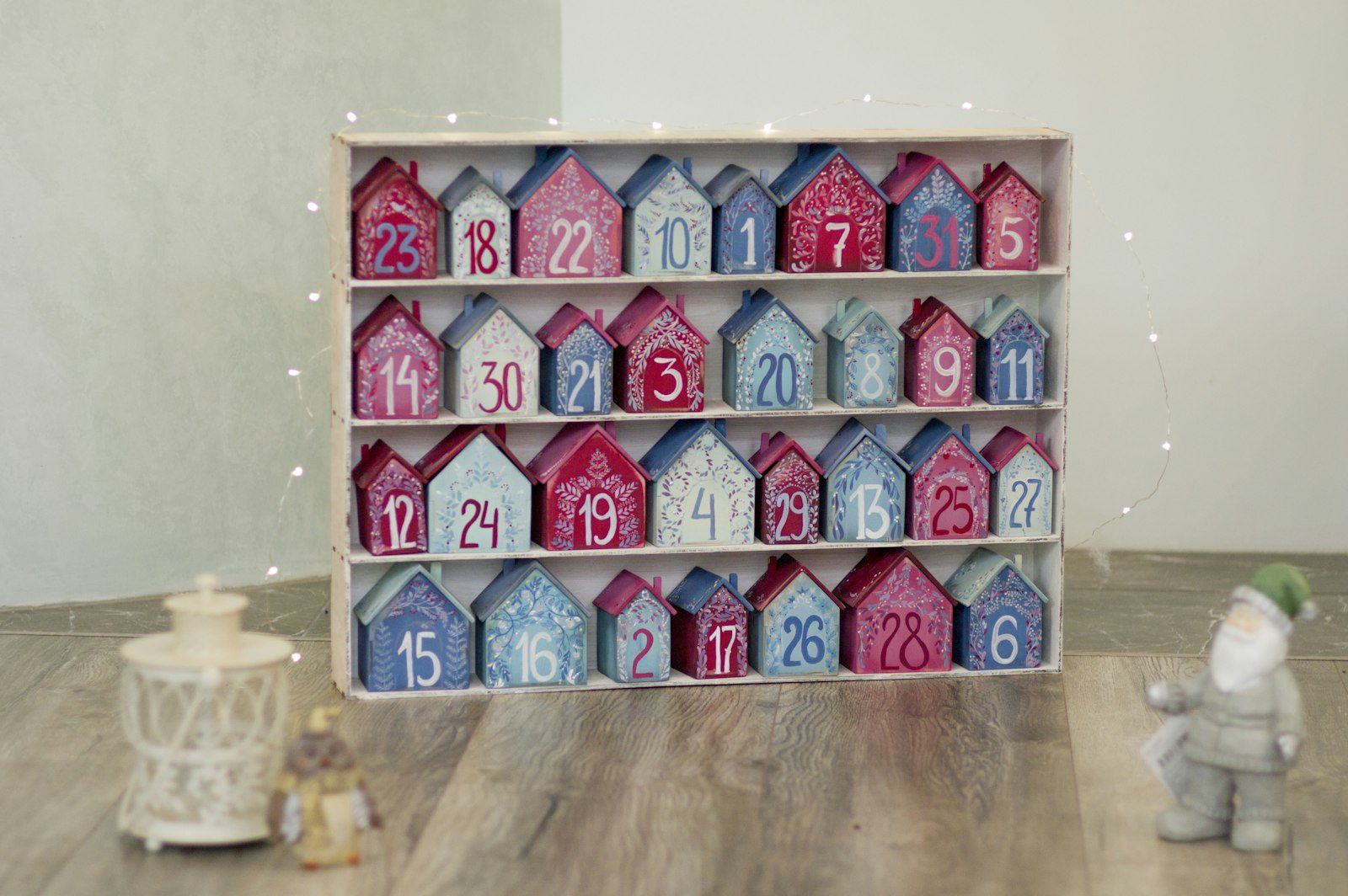
Most advent calendars are designed to be tolerated, not admired. You know the type: a flimsy cardboard box with a winter scene printed on it, propped on a shelf where it slowly warps and sheds glitter until someone throws it away on December 26th. It does its job — one chocolate a day — and then it dies.
But here’s the thing: an advent calendar occupies prime real estate for an entire month. It sits on your wall or mantel from December 1st through Christmas morning, which is longer than some households even keep their tree up. Decorating around a sad cardboard box is like wearing a tuxedo with flip-flops. The calendar should pull its weight visually.
These 12 advent calendar ideas actually look good enough to count as Christmas decor — and most are refillable, so you buy once and use them for years. Some are for kids, some are unapologetically for adults, and every one of them earns its spot.
Classic Wooden Advent Calendars
1. The 24-Drawer Tower
The workhorse of refillable advent calendars: a wooden box roughly the size of a shoebox stood on end, with 24 tiny numbered drawers. It looks like an apothecary cabinet had a Christmas baby, and it fits on a mantel, console table, or bookshelf without dominating the room.
This is the one to buy if you only buy one. Fill the drawers with candy, tiny toys, or — for adults — miniature liquor bottles and coffee samples. Quality matters: cheap versions have drawers that stick or fall out. Look for solid pine or MDF with a smooth finish, and test that every drawer slides freely before December 1st.
Space: 12–16 in. H x 8–10 in. W. Cost: $30–$60. Fine for renters. Storage: drawers stack inside; stores in a tote.
2. The Wooden House Village
Instead of drawers, this style is a row of tiny wooden houses — each one a day — arranged on a mantel or shelf like a miniature village. Numbered doors open to reveal treats. It reads as Christmas decor first and advent calendar second, which is exactly the point.
Style it with bottle-brush trees and a string of warm fairy lights behind it. The houses run 2 to 3 inches tall, so a full village spans about 24 inches — perfect mantel width. Kids will rearrange the houses daily; let them.
Space: 24 in. W village. Cost: $35–$70. Fine for renters. Storage: houses nest in a shoebox with tissue.
3. The Wall-Hung Wooden Tree
A flat wooden Christmas tree silhouette with 24 numbered hooks or pockets, hung on the wall like art. Fill it with small wrapped treats, mini ornaments, or tiny scrolls with activities written on them (“bake cookies,” “drive to see the lights”).
This one solves the surface-space problem: it hangs flat against the wall, so it works in small apartments where every tabletop is already claimed. One nail or a heavy-duty adhesive hook holds it — the whole thing weighs almost nothing.
Space: 24–30 in. H, hangs flat. Cost: $25–$50. Fine for renters (adhesive hook). Storage: slides behind furniture or hangs in a closet.
Fabric & Felt Advent Calendars
4. The Felt Pocket Tree
A felt Christmas tree — usually green or cream — with 24 numbered pockets, hung on a wall or door. Each pocket holds a small treat or a slip of paper. It’s soft, kid-proof, and weighs almost nothing.
This is the best pick for households with toddlers. Nothing breaks, nothing has sharp edges, and if it falls off the wall nobody gets hurt. The downside: felt stretches over time, so buy one with reinforced pocket stitching if you want it to survive more than a couple of seasons.
Space: 30–36 in. H wall hanging. Cost: $15–$30. Fine for renters. Storage: folds flat; fits in a drawer.
5. The Clothespin Garland
Twenty-four small numbered bags or boxes clipped to a length of twine with mini clothespins, strung across a mantel, window, or wall. It’s the most customizable option here — kraft paper bags for rustic, velvet pouches for luxe, colorful envelopes for kids.
Hang the twine from two adhesive hooks and let the bags drape in a gentle swag. The whole setup takes ten minutes and fills a surprising amount of visual space for very little money. Swap the bags yearly to match your color scheme.
Space: 6–8 ft. of twine. Cost: $10–$25. Fine for renters. Storage: bags flatten; twine coils in a sandwich bag.
6. The Quilted Wall Hanging
For the craft-room crowd: a quilted or embroidered wall hanging with numbered pockets, often handmade or from small sellers. These are heirloom pieces — the kind that comes out every December for decades and gets better with age.
Expect to pay more, but you’re buying permanence. Hang it the same weekend you put up the tree so unrolling it becomes part of the ritual. If you sew, this is also a genuinely satisfying November weekend project.
Space: 24–36 in. square. Cost: $40–$90. Fine for renters. Storage: folds flat in a storage bin.
Modern & Minimalist Picks
7. The Magnetic Tin Set
Twenty-four small numbered magnetic tins that stick to your fridge, a magnetic board, or any metal surface. Arrange them in a tree shape, a grid, or scattered organically. Fill with candy, tea bags, or jewelry for a partner.
This is the apartment dweller’s answer to the advent calendar: zero wall damage, zero floor space, and the fridge is already the most-visited spot in the house. When December ends, the tins become spice containers or desk organizers — nothing wasted.
Space: tins ~2 in. diameter each. Cost: $20–$40. Fine for renters. Storage: tins nest inside each other.
8. The Test-Tube Rack
A wooden or acrylic rack holding 24 numbered test tubes, each filled with candy, bath salts, or tiny rolled notes. It looks like a science lab crossed with a candy store — sleek, modern, and weirdly photogenic on a bathroom or bedroom shelf.
Best for adults or older kids (glass tubes and toddlers don’t mix). Fill with layered colored candies for a stained-glass effect, or bath salts and essential oils for a self-care December. Number the tubes with a paint pen or tiny stickers.
Space: 12 in. W x 6 in. H rack. Cost: $25–$45. Fine for renters. Storage: rack and tubes fit in a small box.
9. The Matchbox Tower
Twenty-four small numbered matchboxes stacked into a pyramid, each holding a tiny surprise. Wrap them in coordinating paper — kraft with red twine for rustic, black and gold for modern — and the stack becomes a sculptural centerpiece for a coffee table or entryway console.
This is the cheapest impressive-looking option on the list. A pack of blank matchboxes costs almost nothing, and the wrapping is a fun weekend craft. Kids can help decorate the boxes, which doubles as a November activity when everyone’s bored.
Space: tower ~12 in. H. Cost: $8–$20. Fine for renters. Storage: flatten boxes; store flat.
For Grown-Ups (Yes, Really)
10. The Wine & Beer Box
Twenty-four slots sized for mini wine bottles, beer cans, or nips, in a sturdy box printed like a December countdown. The wine and craft-beer versions sell out earlier than any other type here — buy by early November or settle for leftovers.
Display it on a bar cart or kitchen counter where it doubles as a conversation piece. Pro tip: chill the whole box the night before December 1st so day one’s pour is ready. These make excellent host gifts, too.
Space: 16–20 in. W box. Cost: $40–$120 (filled). Fine for renters. Storage: recycle cardboard; keep wooden boxes.
11. The Jewelry & Beauty Drawer Set
The luxury tier: 24 days of mini beauty products, jewelry pieces, or fragrance samples in an elegant drawer box designed to look good on a dresser — cream and gold packaging, not cartoon Santas.
They’re pricey, but the per-day math is kinder than it looks: a $100 beauty calendar with 24 minis beats buying the same products individually. Keep the box afterward — the drawers become perfect jewelry or desk storage year-round.
Space: 12–14 in. W dresser box. Cost: $60–$150. Fine for renters. Storage: becomes year-round storage.
12. The Activity Scroll Calendar
No treats at all — just 24 tiny scrolls, each with a December activity: “make hot chocolate,” “walk to see the neighborhood lights,” “call grandma.” Roll them into a decorative jar, a wooden box, or tiny envelopes on a string.
This is the answer for families drowning in stuff and sugar. It costs almost nothing, takes an hour to assemble, and the memories outlast any chocolate. Kids love it because every morning is a surprise; adults love it because it forces the December slowdown nobody actually schedules.
Space: jar or box of your choice. Cost: $0–$15. Fine for renters. Storage: the jar lives in the kitchen year-round.
Where to Hang Your Advent Calendar
Placement matters as much as the calendar itself. Hang it where the daily ritual actually happens — by the coffee maker, on the fridge, in the kids’ hallway — not where it photographs best. Keep it at eye level for the shortest person opening it (usually a kid), and away from heating vents and sunny windows, which melt chocolate and fade fabric.
Quick guide by type: wall-hung calendars (felt trees, quilted hangings, wooden trees) go on a living room or hallway wall with a single hook. Drawer towers and villages belong on the mantel or a console table. Magnetic tins own the fridge. Garlands span windows, mantels, or doorways.
FAQ
When should I buy an advent calendar?
Earlier than you think. The good refillable ones — wooden towers, villages, beauty calendars — start selling out in early to mid-November. Disposable chocolate calendars are everywhere until late November, but anything worth keeping for years needs an October or early-November purchase. Put it on your list now.
What do you put in a refillable advent calendar?
Match the filler to the person: candy and tiny toys for kids, tea bags and chocolate for teens, miniature liquor bottles or jewelry for a partner, dog treats for the dog (yes, really — they notice). Non-stuff options work too: activity scrolls, handwritten compliments, or clues to a hidden weekend outing.
Are advent calendars just for kids?
The wine, beauty, and jewelry calendars say otherwise — the adult advent calendar market is enormous. A test-tube rack of bath salts or a matchbox tower of tiny love notes is as grown-up as December gets. Buy the kid one for the kids, and get yourself one too.
How do you store an advent calendar in January?
Wooden towers and villages: wrap in tissue and store in a tote, drawers facing up so they don’t slide out. Fabric and felt: fold flat in a drawer or bin — never hang them in storage or the pockets stretch. Magnetic tins: nest them together. Matchbox towers: flatten and store flat. Label everything “ADVENT” so next November you find it without digging.
The Verdict
An advent calendar takes up wall space for 25 days — it might as well look good. Pick a refillable style that matches your decor, buy it before mid-November, and place it where the morning ritual actually happens. The wooden drawer tower is the safest all-around bet, the felt pocket tree wins for toddlers, and the magnetic tins win for apartments. Whatever you choose, fill it with intention — the daily surprise is the whole point.