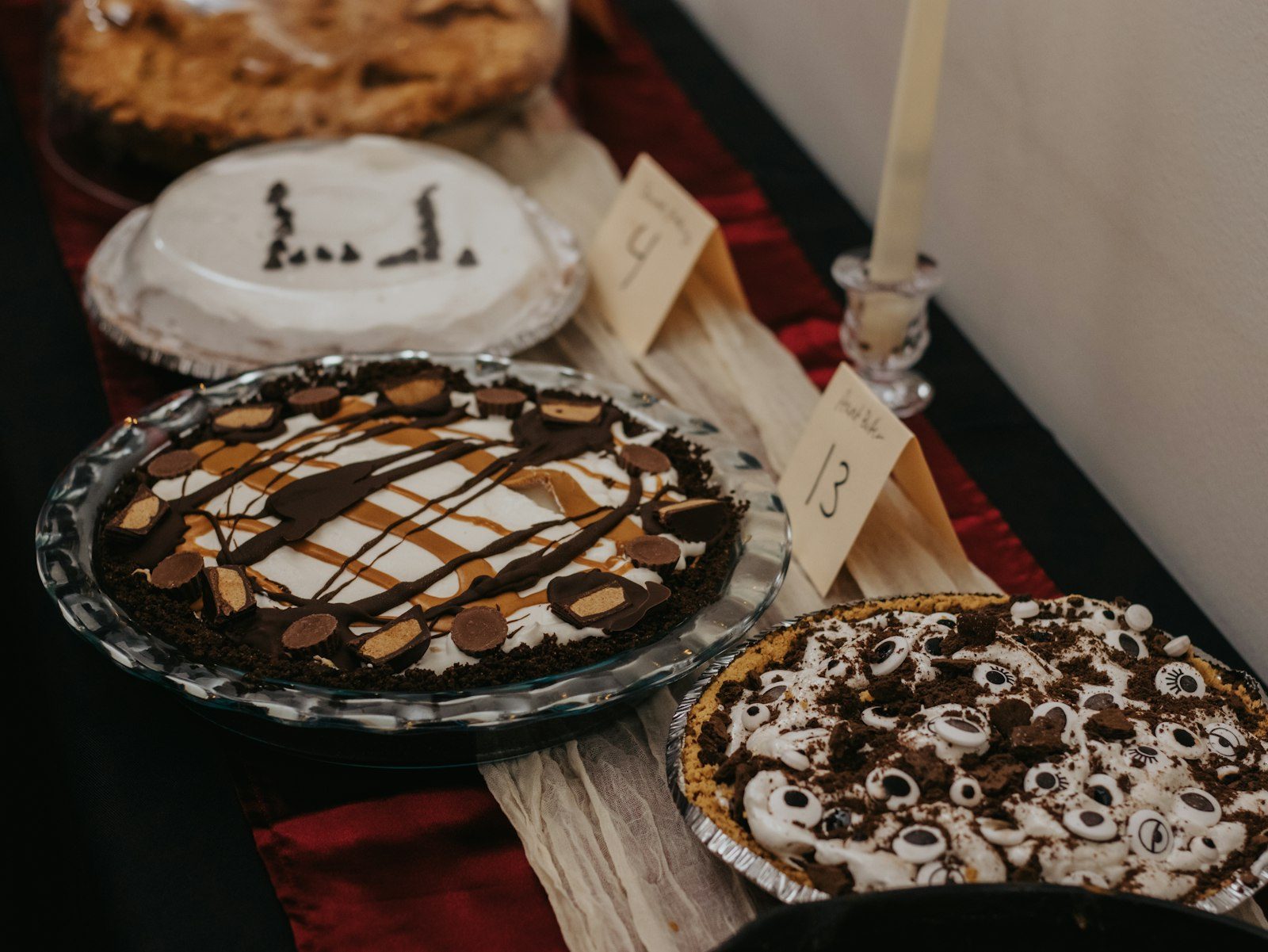
Here’s what actually happens after Thanksgiving dinner: fifteen people migrate to the kitchen at once. Someone wants coffee. Someone else is hunting for the pie server. A third person is asking where the whipped cream is while standing directly in front of it. The cook, who has been on their feet for six hours, is now trapped behind a wall of well-meaning relatives.
The fix is embarrassingly simple: move dessert OUT of the kitchen. A thanksgiving coffee and dessert bar — set up on a sideboard, a console table, even a card table in the dining room — pulls the entire after-dinner crowd out of your workspace and gives them somewhere to gather that isn’t blocking the dishwasher.
This isn’t about being fancy. It’s about traffic engineering with pie. Set it up once, and the kitchen stays yours.
Location: Get It Out of the Kitchen
1. The Sideboard Station
The ideal dessert bar lives on a sideboard, buffet, or console table in the dining room — close enough to dinner that nobody gets lost, far enough from the kitchen that the cook can breathe. The rule: guests should be able to reach dessert without passing through the cooking zone.
No sideboard? A folding card table with a floor-length tablecloth looks intentional, not improvised. The tablecloth hides the folding legs, and nobody will know it wasn’t always there. Position it against a wall with room to approach from both sides — one-way traffic creates a line; two-sided access creates flow.
Space: 4–6 ft. of surface. Cost: $0–$30 for a tablecloth. Fine for renters. Storage: card table folds into a closet.
2. The Flow Trick: One-Way Traffic
Arrange the bar so guests naturally move in one direction: plates first, then pie, then toppings, then coffee at the end. Left to right, or in a U-shape around the table. This sounds fussy and matters enormously — a bidirectional dessert bar creates the same bottleneck you’re trying to escape.
Put a small sign at the start: “Start here →”. Handwritten on a card, leaning against the plate stack. People follow signs. It’s human nature. One arrow eliminates 90% of dessert-bar traffic jams.
Space: 6 ft. linear flow. Cost: $0 (a notecard). Fine for renters. Storage: nothing to store.
The Three Zones
3. The Pie Zone
Pies go first in the flow, on the flattest, most stable part of the bar. Pre-slice nothing — whole pies look abundant and guests enjoy choosing their own slice size. Put out one pie server per pie (this is the item everyone forgets), plus a stack of small dessert plates.
The whipped cream lives HERE, not in the fridge, in a bowl over ice or in a chilled dispenser. Every trip back to the kitchen for whipped cream is a failure of bar design. Ice cream, if you’re serving it, stays in the freezer until dessert time — then it moves to the bar in its tub with a scoop. No exceptions.
Space: 2 ft. of bar space. Cost: $8–$15 per extra pie server. Fine for renters. Storage: servers live with your utensils.
4. The Coffee Zone
Coffee goes LAST in the flow — it’s the final stop, and putting it at the end means people linger there instead of clogging the pie zone. Set up: the coffee maker (or a thermal carafe, which is better — no cords, no waiting, no burnt third pot), mugs, sugar, cream, and spoons.
The thermal carafe is the pro move. Brew a full pot before dinner, pour it into the carafe, and the coffee station runs itself for hours. No one has to brew, no one waits, and the coffee maker doesn’t hog an outlet all evening. Two carafes — one regular, one decaf — and you’re running a café.
Space: 2 ft. of bar space. Cost: $25–$40 for a thermal carafe. Fine for renters. Storage: carafe lives with your coffee gear.
5. The Toppings Bar
This is where a dessert bar goes from functional to memorable: a row of small bowls with the toppings. Crushed pecans, chocolate shavings, caramel sauce, cinnamon, mini marshmallows, crushed gingersnaps. It costs almost nothing — you’re raiding the baking cabinet — and guests go genuinely feral for it.
Use matching small bowls or mason jars. Label anything non-obvious. The toppings bar is also where dietary needs get quietly solved: a bowl of coconut whipped cream next to the dairy version, and nobody had to make an announcement.
Space: 1 ft. of bar space. Cost: $5–$10 for extras. Fine for renters. Storage: bowls return to the kitchen.
The Kid Corner
6. The Hot Cocoa Corner at Kid Height
Kids can’t reach the bar, and they shouldn’t reach the coffee. Set up a separate hot cocoa station at kid height — a low side table, a sturdy step stool, or even the coffee table. Thermal carafe of hot cocoa (warm, not scalding), small cups, marshmallows, and a ladle they can manage.
This keeps small hands away from the hot coffee zone and gives kids their own ritual to be excited about. The cocoa corner is also the bribe that gets them through dinner: “hot cocoa bar after pie.” It works. Every time.
Space: 2 ft. at 24 in. height. Cost: $10–$15 for cocoa supplies. Fine for renters. Storage: supplies return to the pantry.
Styling That Takes Five Minutes
7. The Tiered Stand Trick
A two- or three-tiered stand is the fastest way to make a dessert bar look designed. It adds verticality — the eye reads height as abundance — and it doubles your surface area without needing a bigger table. Pies on the bottom tier, cookies and bars on the upper tiers, done.
No tiered stand? Stack sturdy books under a cutting board. Wrap the books in kraft paper if you’re feeling fancy. The guests see a riser; you see the cookbooks you already owned. Styling is just confidence with props.
Space: 12 in. footprint. Cost: $20–$35 for a tiered stand. Fine for renters. Storage: disassembles flat for storage.
8. The Five-Minute Fall Dressing
The bar needs exactly three decorative touches: a small pumpkin or gourd cluster at one end, a sprig of eucalyptus or fall leaves tucked behind the carafes, and a cloth napkin under the plate stack in a fall color. That’s it. The food is the decoration — pies are beautiful, toppings are colorful, and over-styling a dessert bar just gets in the way of the pie.
Light one candle if the bar is away from food-prep chaos. Scented is fine here — cinnamon or vanilla — because nobody’s cooking at the dessert bar. Keep it unscented if anyone’s sensitive. The candle is ambiance, not a requirement.
Space: A 1 ft. vignette. Cost: $5–$10 for gourds. Fine for renters. Storage: gourds compost; napkins wash.
FAQ
How much pie do I actually need? Plan one 9-inch pie per 6–8 guests, and always have at least two varieties (pumpkin plus one — pecan, apple, whatever your crowd loves). Leftover pie is a feature, not a bug; send slices home with guests. Running out of pie is the only true dessert-bar failure, and it’s completely avoidable with this math.
What if I don’t drink coffee — do I still need a coffee zone? Yes, because your guests do. But swap in what your crowd actually drinks: a hot cider station, a tea selection, or both. The zone structure stays the same — hot beverage, cups, sweeteners, spoons. The principle is “hot drink at the end of the flow,” not “coffee specifically.” Know your people.
How do I keep the bar from looking picked-over halfway through the night? Refill in waves, not all at once. Put out half the cookies, keep half in reserve. When a pie is down to slivers, consolidate — move the last slices to a smaller plate and remove the empty pie dish. A bar with less food arranged well looks better than a bar with more food scattered. Tidy the bar once mid-evening; it takes three minutes.
Can the dessert bar double as the kids’ table dessert? Absolutely — and it should. The kids’ hot cocoa corner (section 6) is already part of the bar. Let kids hit the toppings bar too; it’s the most fun part for them. Just keep the glass carafes and the hot coffee at adult height, and put the kid-friendly items (cookies, cocoa, marshmallows) on the lower tier or the low table. One bar, two heights, everybody served.
The Verdict
A thanksgiving dessert table isn’t decoration — it’s crowd control disguised as hospitality. Move dessert out of the kitchen, arrange it in one-way flow, zone it into pie, coffee, and cocoa, and the after-dinner chaos organizes itself.
The cook gets their kitchen back. The guests get pie without a scavenger hunt. The kids get a cocoa ritual. And you get to sit down for the first time all day with a slice of pecan pie and a coffee that someone else poured. That’s the whole point.